
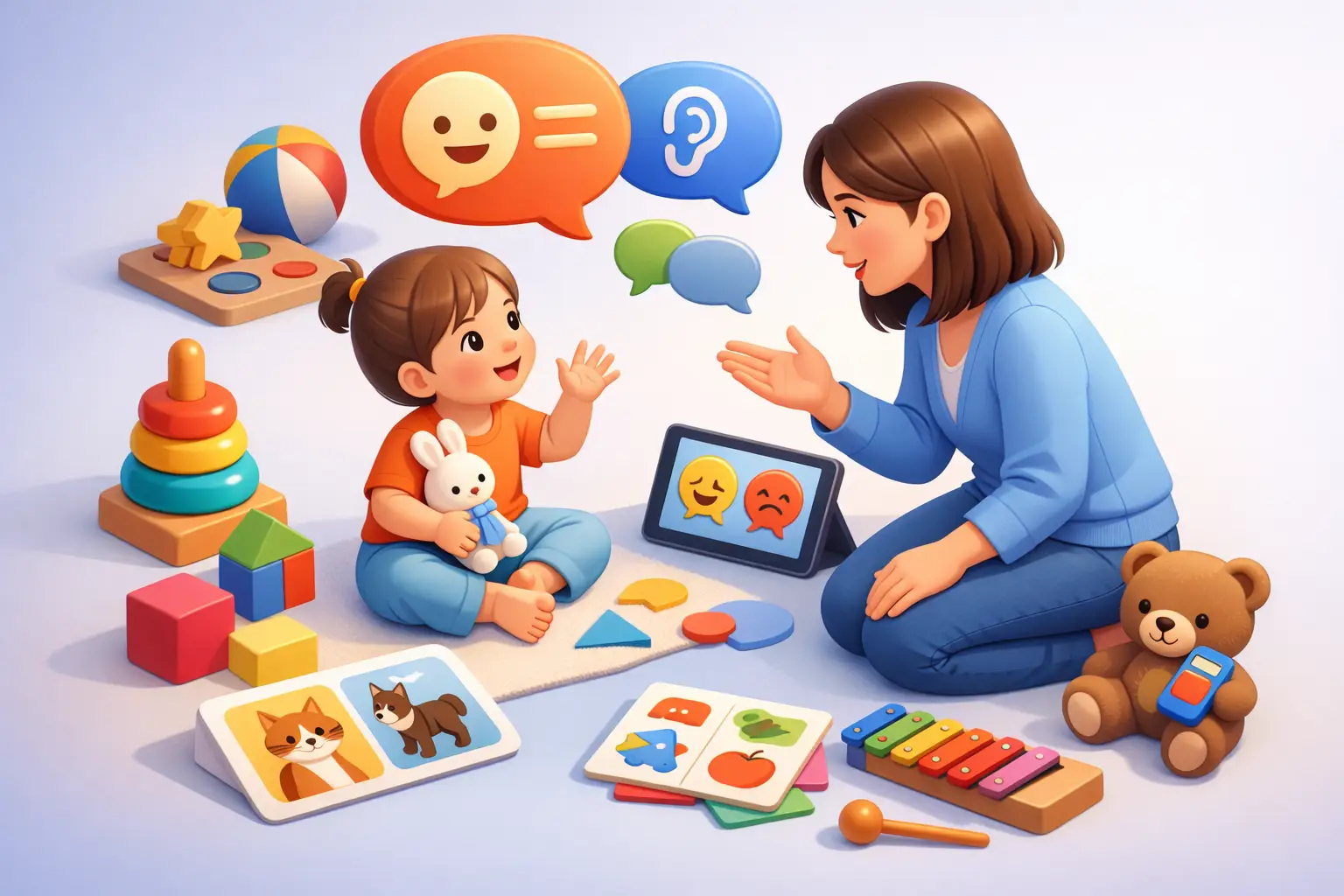
A toddler who points at the banana, looks to you, and waits for your response is already communicating a big idea. Before children can explain every thought in words, they use gestures, sounds, facial expressions, and actions to connect with the people who care for them. Toddler communication development activities turn these ordinary moments into warm, encouraging conversations.
The goal is not to make a toddler speak on demand or memorize long lists of words. It is to help them feel heard, understood, and confident that their voice matters. With patient adults, playful repetition, and lots of chances to interact, children gradually build the language skills they need for friendships, learning, and growing independence.
Why communication grows through connection
Toddlers learn language best in responsive relationships. When a child says, “Car!” and an adult replies, “Yes, a red car is driving fast,” the child hears a new word, a fuller sentence, and the pleasure of being understood. This back-and-forth exchange is more valuable than simply hearing words in the background.
Communication development includes much more than talking. A toddler is learning to listen, take turns, follow simple directions, use gestures, name familiar people and objects, share feelings, and begin to tell small stories. Some children are eager talkers, while others watch quietly before joining in. Both approaches can be perfectly natural.
What matters most is steady progress over time. A child may communicate in more than one language, use a favorite gesture before using a word, or speak more freely at home than in a busy group setting. These differences are common. Gentle encouragement works better than pressure.
Toddler communication development activities for everyday life
The most meaningful language practice often happens during routines you already share. Rather than setting aside a formal lesson, pause long enough for your child to join the conversation.
Turn daily routines into talk time
Getting dressed, washing hands, eating breakfast, and putting toys away all offer useful words that children can see and experience. Describe what is happening with short, clear phrases: “Your blue sock is on,” “The water feels warm,” or “You put the block in the basket.”
Then leave a small pause. A pause gives a toddler time to look, gesture, attempt a word, or answer in their own way. If they point to milk, you can build on it by saying, “You want more milk. Here is your milk.” This models language without asking them to repeat it perfectly.
Choices are especially helpful because they invite a response while keeping the moment simple. Ask, “Do you want apple or banana?” Hold up both options and accept a word, sound, point, or look as communication. Over time, you can encourage a fuller answer: “Banana, please.”
Read the same books again and again
Toddlers often choose one beloved book for days or weeks. This repetition is not boring to them. It helps them recognize pictures, remember words, predict what happens next, and feel confident participating.
As you read, point to pictures and make simple comments instead of trying to finish every word on the page. Ask easy questions with visual answers, such as, “Where is the dog?” or “What does the cow say?” You can also pause before a familiar part and let your child fill in a sound or word.
Picture books about daily life can be particularly useful: families, animals, food, vehicles, bedtime, and feelings. The right book is not necessarily the one with the most words. It is the one your child wants to explore with you.
Sing, move, and copy sounds
Songs and rhymes give toddlers a safe, joyful way to practice listening and speaking. The repeated words and predictable actions make it easier to join in. Try songs with clapping, waving, stomping, animal noises, or simple hand motions.
You do not need a perfect singing voice. Your child benefits from seeing your face, hearing your rhythm, and taking turns with you. Pause before a familiar sound, such as “Old MacDonald had a…” and wait for a moo, a smile, or an attempt at the next word.
Sound play can happen anywhere. While driving, notice a truck and say “beep beep.” During bath time, make splashing sounds. When playing with animals, try “roar,” “baa,” and “quack.” These playful exchanges support attention, imitation, and early speech sounds.
Follow your child’s play
A toddler deeply focused on stacking cups or rolling a train is ready for meaningful language. Sit nearby, observe first, and describe what they are doing: “The train is going under the chair,” or “You made a tall tower.”
Try not to take over the play with too many questions or directions. Following your child’s interest helps them connect words to something that already matters to them. Add one small idea at a time, such as placing a toy person on the train or offering a second block for the tower.
Pretend play becomes especially valuable as toddlers grow. Feeding a doll, putting a teddy bear to bed, or pretending to cook creates opportunities for new vocabulary and simple story language. You might say, “Bear is sleepy. Night-night, Bear,” and let your child lead the next step.
Talk about feelings without rushing to fix them
Toddlers have strong feelings long before they have the words to explain them. Naming what you notice can make these moments less frustrating for both of you. Try, “You are upset because the puzzle piece will not fit,” or “You look proud of your painting.”
This does not mean every feeling disappears after it is named. It means the child learns that emotions can be noticed, shared, and managed with a caring adult nearby. Simple feeling words like happy, sad, mad, worried, excited, and tired become useful tools over time.
How adults can make language easier to learn
A warm conversation is not a quiz. Toddlers may stop talking when they are repeatedly asked, “What is this?” Instead, balance questions with comments. Say what you see, respond to what your child offers, and expand their message by one or two words.
Use clear language, but there is no need to use baby talk for every word. If your child says “wawa,” you can respond naturally: “Yes, water. You want water.” They hear the correct word without feeling corrected.
Screens can sometimes offer songs or familiar characters, but they do not replace a responsive adult. A video cannot notice a child’s puzzled look, wait for their answer, or celebrate a new attempt at a word. If screen time is part of family life, talking and playing together afterward adds more value than passive viewing.
At CESK Pre-school, communication is supported through play, songs, stories, group routines, and caring educator-child interactions. In a well-planned early learning environment, children also gain language from watching peers, practicing turn-taking, and sharing their ideas in a secure setting.
When to ask for extra support
Every toddler develops at an individual pace, and comparing children can create unnecessary worry. Still, it is wise to speak with your child’s pediatrician or a qualified speech-language professional if you have concerns about hearing, understanding, gestures, lost skills, or limited progress in communication.
You may also want guidance if your toddler rarely responds to their name, does not seem to understand familiar requests, becomes very frustrated because they cannot communicate, or has stopped using words or gestures they once used. Seeking advice early is not labeling a child. It is a practical way to understand what support may help.
Keep the focus on connection. Notice your child’s attempts, answer with interest, and make room for their own pace. A shared song at bedtime, a conversation over snacks, or a few playful words beside a block tower can tell a toddler something powerful: what you have to say matters.