
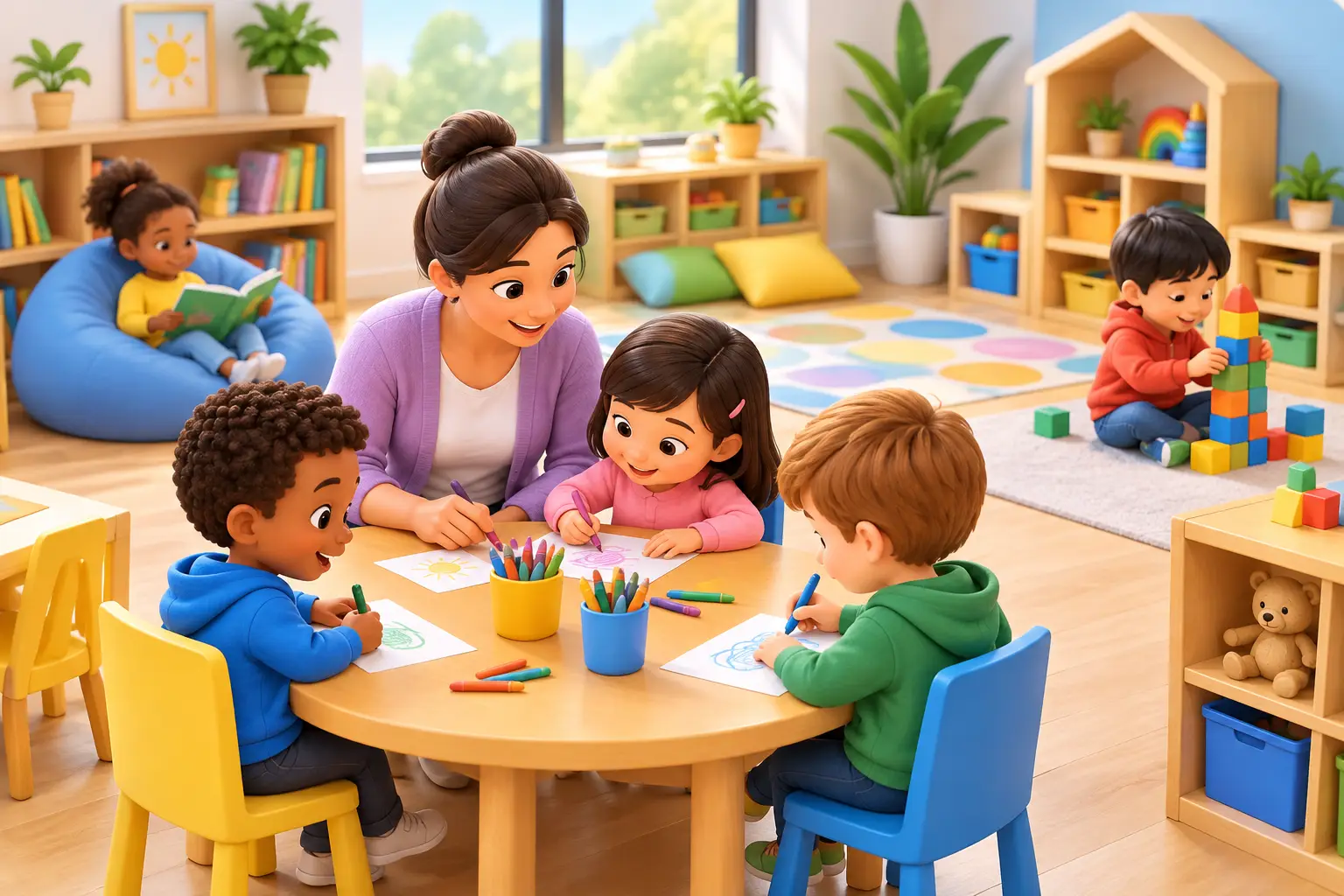
A child’s day can feel very long when they are away from home for the first time. For parents, choosing full day childcare is not simply about covering work hours. It is about finding a place where their child is held, comforted, fed, encouraged, and included in meaningful learning from morning through afternoon.
For babies, toddlers, and preschoolers, consistency matters. They need familiar faces, predictable routines, and gentle support when they are tired, unsure, excited, or ready to try something new. The right childcare setting gives families confidence that each part of the day has been planned around a child’s well-being and development.
What Full Day Childcare Should Give Your Child
A full day program should feel like more than a longer nursery session. It should balance attentive daily care with opportunities to play, communicate, move, rest, and build independence. Children learn continuously in their early years, including during meals, changing routines, outdoor play, story time, and quiet moments with a caring educator.
A thoughtfully organized day allows children to know what comes next. They may arrive to a warm welcome and free play, join a small-group activity, enjoy a snack, spend time moving and exploring, eat lunch, rest if needed, then return to calm, engaging play before pickup. This rhythm is reassuring because young children do not need to guess what their day will hold.
The routine should still leave room for individual needs. A young baby may need feeding, sleeping, and soothing on a different schedule from the rest of the group. A toddler who is learning to separate from a parent may need extra reassurance at arrival. A preschooler may be ready for a longer conversation, a creative project, or a chance to help with a simple classroom responsibility.
Care and learning belong together
At this age, learning does not need to look like formal schoolwork. It often happens through play with a clear purpose. Building blocks can strengthen hand control, problem-solving, and early math ideas. Singing songs can support listening, vocabulary, memory, and confidence. Sharing toys helps children practice patience and begin to understand the feelings of others.
Educators can make these everyday moments richer by talking with children, asking simple questions, naming emotions, and offering age-appropriate choices. When a child tries to put on a shoe, carry a cup, tidy a toy, or ask for help, they are developing independence alongside practical skills.
For families seeking full day childcare in Doha, this combination is especially valuable. Children receive dependable care during the working day while continuing to grow through experiences that are appropriate for their age and stage.
The Right Environment Changes as Children Grow
Children from two months to four years old have very different needs. A quality early childhood setting recognizes this by organizing classrooms and activities around development, rather than expecting every child to follow the same pace.
In a baby classroom, care is deeply personal. Babies need close supervision, responsive feeding and rest routines, clean surroundings, and calm interactions that help them feel secure. Educators support early physical development through safe floor play, tummy time where appropriate, reaching, grasping, sounds, songs, and face-to-face communication. These small exchanges help babies begin to trust the people and world around them.
As babies become toddlers, their curiosity grows quickly. They want to touch, carry, climb, repeat words, and make choices. A toddler program should provide safe movement, sensory play, music, simple stories, and plenty of language throughout the day. It should also help children begin to manage transitions, play beside peers, and express their needs with growing confidence.
Preschool-age children are ready to take a more active role in their classroom community. They benefit from pretend play, early literacy experiences, creative materials, group activities, outdoor exploration, and opportunities to solve small problems with guidance. School readiness is not about rushing children into worksheets. It is about helping them listen, communicate, take turns, follow simple routines, and believe that learning can be enjoyable.
At CESK Pre-school, age-based groups such as BabyStar, Tiny Cubs, Tweenies, and Biggies allow children to receive support that matches their changing needs. This helps educators create activities that are neither too demanding nor too limited for the children in their care.
Safety Is Part of the Learning Experience
Parents should never have to separate safety from education when selecting childcare. Children are most able to play, explore, and connect when they feel protected. A welcoming classroom should also be clean, carefully supervised, and designed with young children in mind.
Look for clear procedures around arrival and pickup, visitor access, hygiene, food routines, rest time, and communication with families. Ask how educators supervise children during active play and how they respond if a child is upset, unwell, or has an accident. The answers should be calm, specific, and easy to understand.
Qualified, caring staff are equally important. Young children need adults who can read their cues, recognize developmental changes, and respond patiently. Professional educators understand that behavior is communication. A toddler who pushes may be overwhelmed or unable to express a feeling. A child who becomes quiet may need time, comfort, or a familiar activity. Gentle guidance teaches children what to do, rather than simply telling them what not to do.
A home-like feeling also matters, but it should not mean an unstructured environment. The strongest programs pair warmth with thoughtful routines, appropriate boundaries, and high standards of care. Children can feel free to be themselves while parents feel assured that their day is being handled responsibly.
How Families Can Judge a Full Day Program
A visit often tells parents more than a brochure. Notice the atmosphere when you enter. Are children engaged in play or receiving comfort when they need it? Do educators speak kindly at the child’s level? Are materials within reach, rooms clean, and routines visible without making the setting feel rigid?
It is useful to ask how the program communicates throughout the day. Families do not need a constant stream of updates, but they should feel informed about meals, sleep, activities, milestones, and any concerns. Honest communication is particularly helpful during the first weeks, when parents are learning how their child settles and how educators are getting to know them.
Ask about the daily rhythm, but also ask what happens when the rhythm needs to change. A good program has structure while remaining responsive. Children have difficult mornings, growth spurts, changing sleep needs, and moments when they need more emotional support. Flexibility within a caring framework is a sign that the child is seen as an individual.
The best choice can depend on your family’s schedule, your child’s temperament, and their previous experience away from home. Some children settle quickly; others need a gradual start. There is no prize for an instant goodbye. What matters is that the setting works with your family to build trust at a pace that feels supportive.
Helping Your Child Settle Into a Longer Day
Starting childcare is a transition for the whole family. A calm, confident goodbye is often kinder than a long farewell, even when emotions are high. Children take reassurance from knowing that their parent trusts the adults caring for them and will return at the end of the day.
Before the first day, talk simply about what will happen: arriving, playing, eating, resting, and coming home. For toddlers and preschoolers, it can help to describe familiar parts of the routine rather than making large promises about how much fun they will have. A favorite comfort item, where permitted, may make the first days easier.
At pickup, give your child time to reconnect. Some children want to talk immediately; others need a snack, cuddle, or quiet moment first. Asking one gentle question, such as “What made you smile today?” can open the door without turning the journey home into an interview.
When full day childcare is nurturing, secure, and purposeful, children do not just spend time away from home. They gain a trusted place of their own – a place to play, learn, grow in confidence, and return to their family with new discoveries to share.